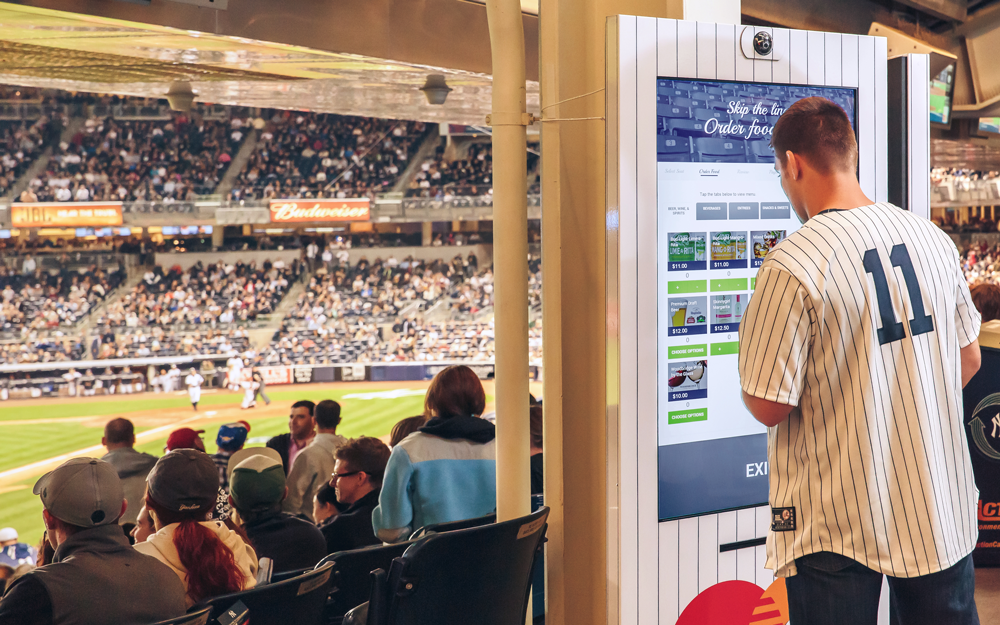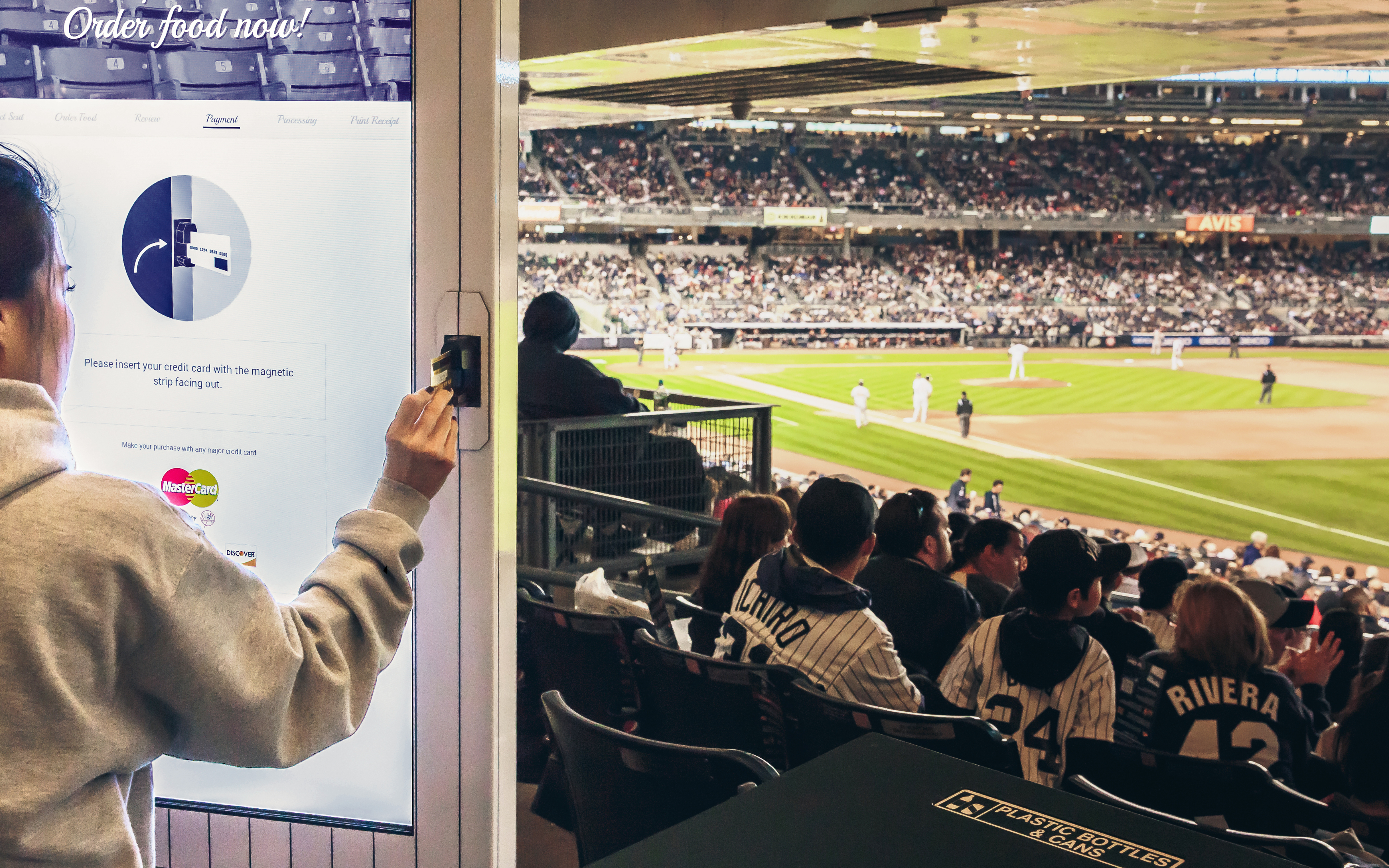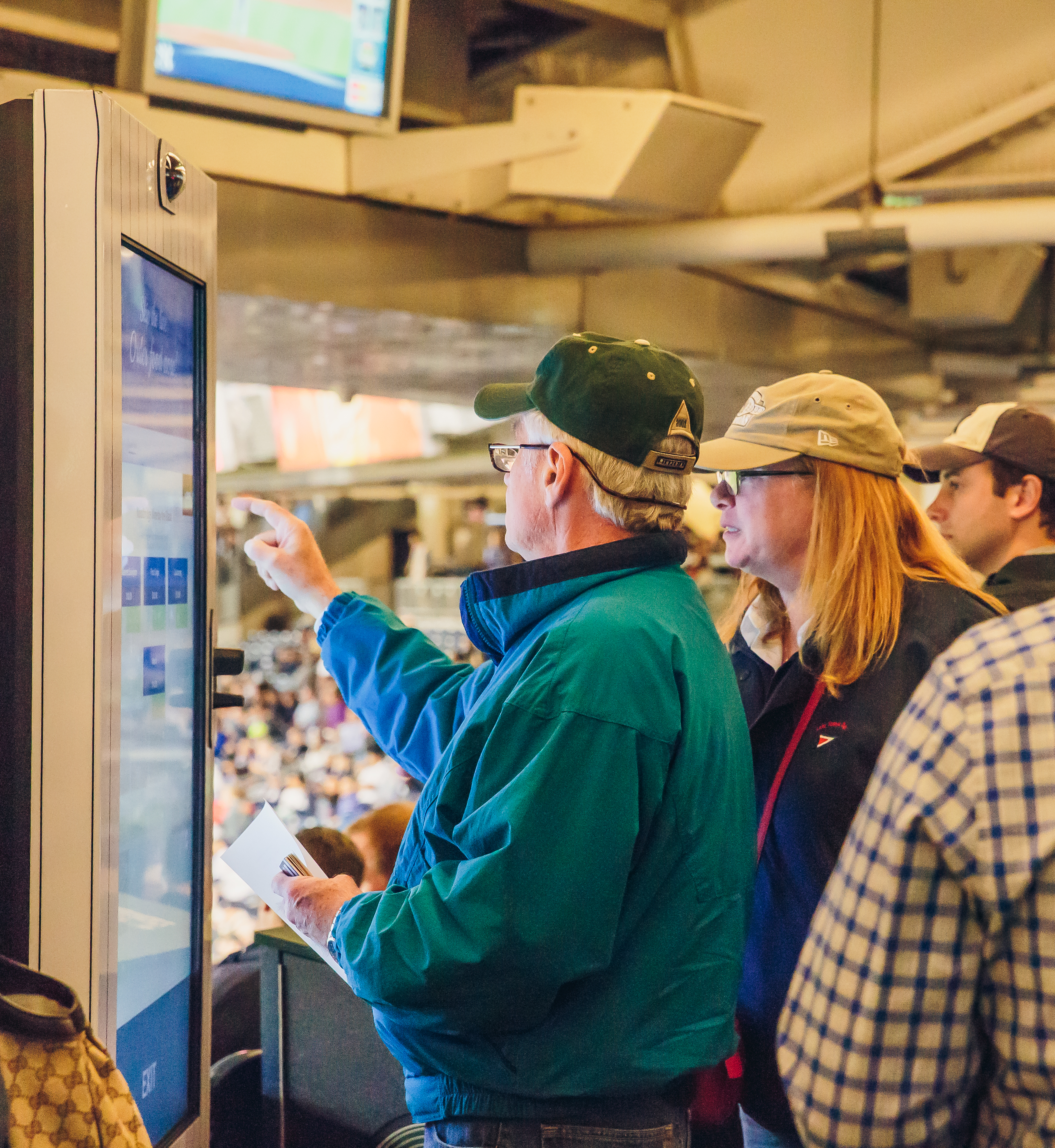
Fan using a food-ordering kiosk at Yankee Stadium

Delaware North

Ordering Food at Yankee Stadium

Serving in-seat food delivery to fans of one of America’s favorite teams

2014 0→1 Design

  • Design Lead
  • Creative Direction
  • UX Strategy

Overview

Help fans skip the lines and spend more watching the game

For the 2014 baseball season, City Corridor was tasked with creating a new digital self-service ordering experience that would allow Yankee Stadium attendees to purchase food and beverages without waiting in traditional concession lines.

As the design lead, I owned the project’s creative direction and UX strategy, taking the experience from initial concept through interaction design and final execution. Because there was no existing digital product to optimize, the work required defining the ordering model from the ground up: how fans would browse more than 30 menu items, customize products, review discounts, provide seat-delivery information, and complete an order in a high-traffic stadium environment.

The resulting kiosk-based point-of-sale experience connected digital ordering with an operational fulfillment model in which stadium staff prepared orders and delivered them directly to fans at their seats.

Results

0→1

Created a new end-to-end digital ordering experience that enabled fans to purchase concessions without leaving the game to wait in traditional concession lines

The Opportunity

Design an easy to navigate ordering system that supports a diverse menu, product choices, discounts, and seat & payment information

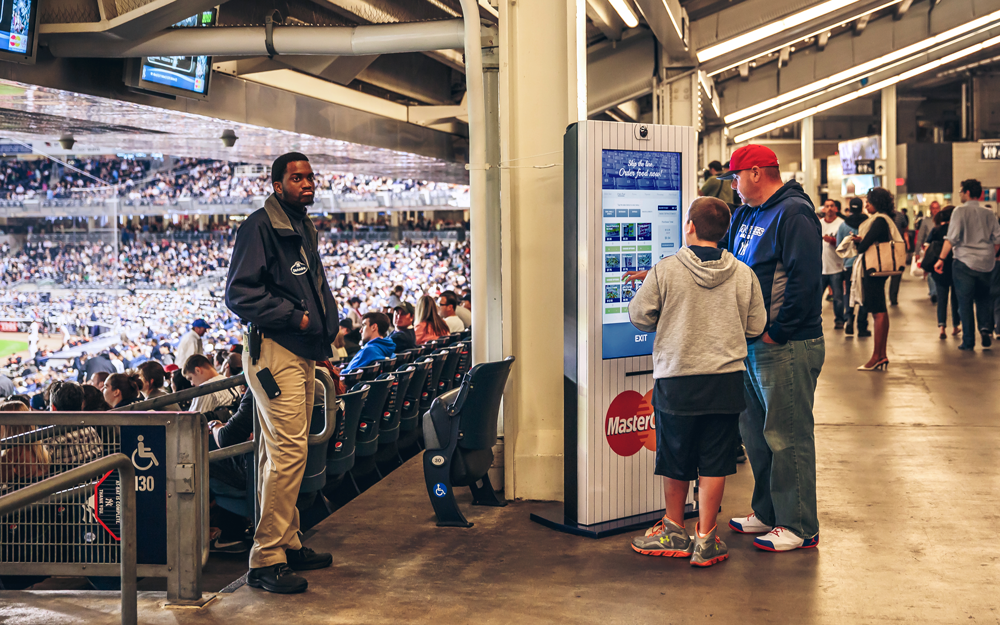
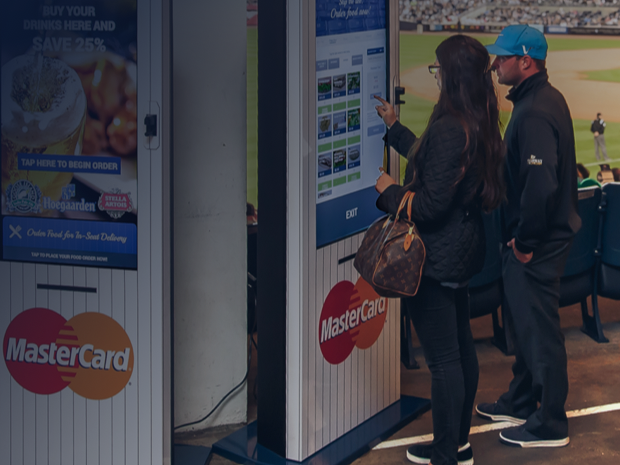
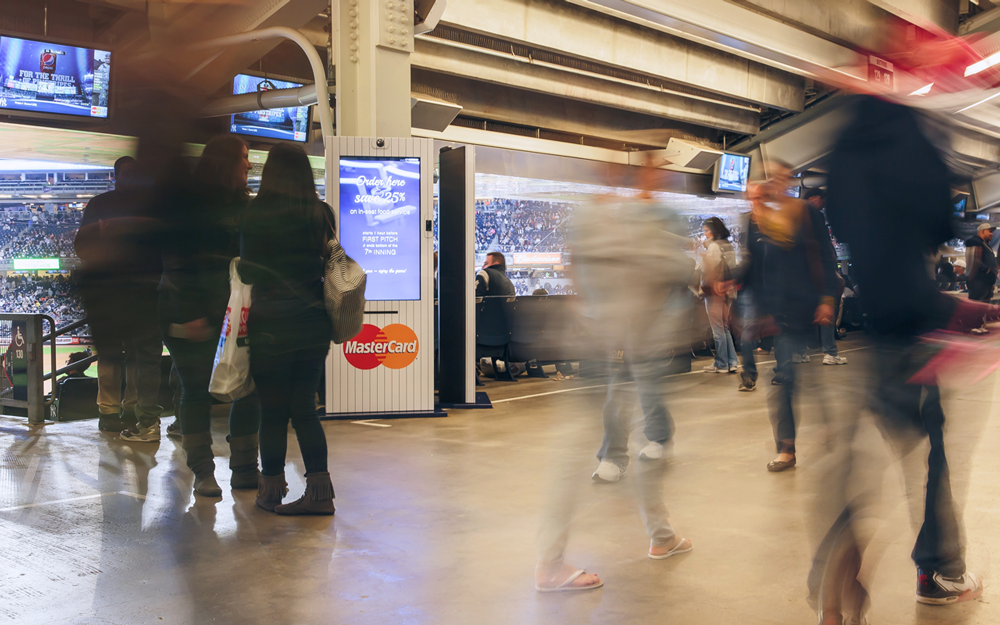
Yankee Stadium concourse and food-ordering kiosks

Concession ordering at a major sporting event presents a distinct product-design challenge. Fans want food and drinks, but every minute spent navigating a menu or waiting in line is time spent away from the event they came to see.

The project began without an existing digital experience to build upon. We needed to define how an in-stadium ordering experience that would accommodate more than 30 food and beverage items, product variations, discounts, and the logistics required to deliver each order to a specific seat.

Key Design Decisions

  1. 1

    Design for the stadium context

    The experience prioritized speed, legibility, and low interaction cost because users were completing a task while simultaneously attending a live event.

  2. 2

    Build a system rather than individual screens

    The menu needed to support dozens of products with different options and requirements, so we established reusable interaction patterns capable of handling variation across the catalog.

  3. 3

    Reduce complexity without removing necessary choices

    Product customization, discounts, and delivery info each needed to be introduced at the appropriate stage rather than overwhelming the customer upfront.

  4. 4

    Treat digital and physical fulfillment as one experience

    The kiosk could only succeed if its interaction model supported what happened after checkout. Seat information and order delivery therefore became core parts of the product experience.

The Solution

Defining the end-to-end ordering experience

Turning a concession menu into a scannable interface

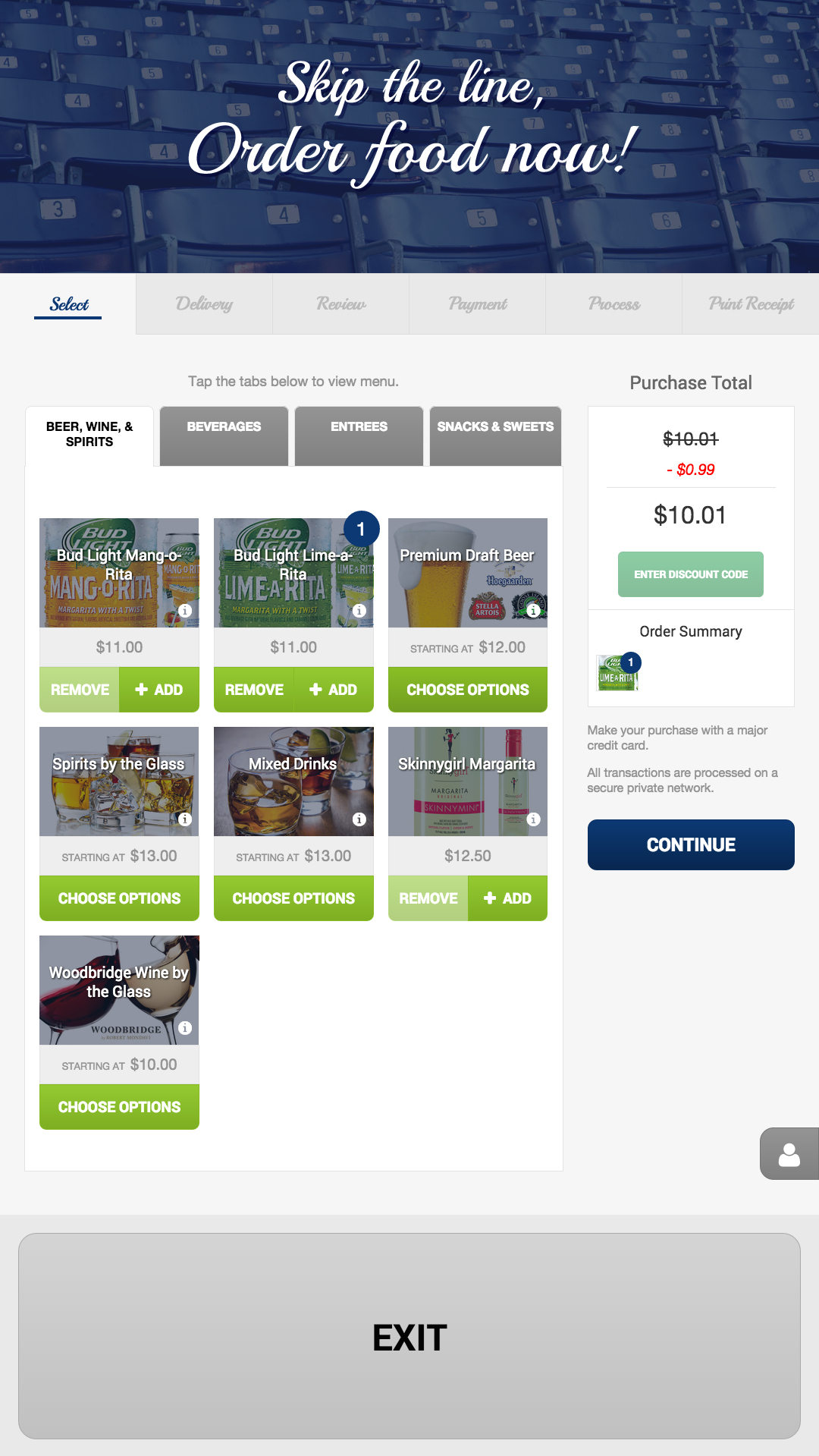
The primary ordering screen needed to accommodate 30+ food and beverage items while remaining usable in a kiosk environment.

Rather than treating the experience like a traditional ecommerce catalog, the interface prioritized quick visual scanning and direct product selection.

Food and beverage choices were clearly categorized and displayed together with the options customers needed to complete an item without introducing unnecessary steps into the transaction.
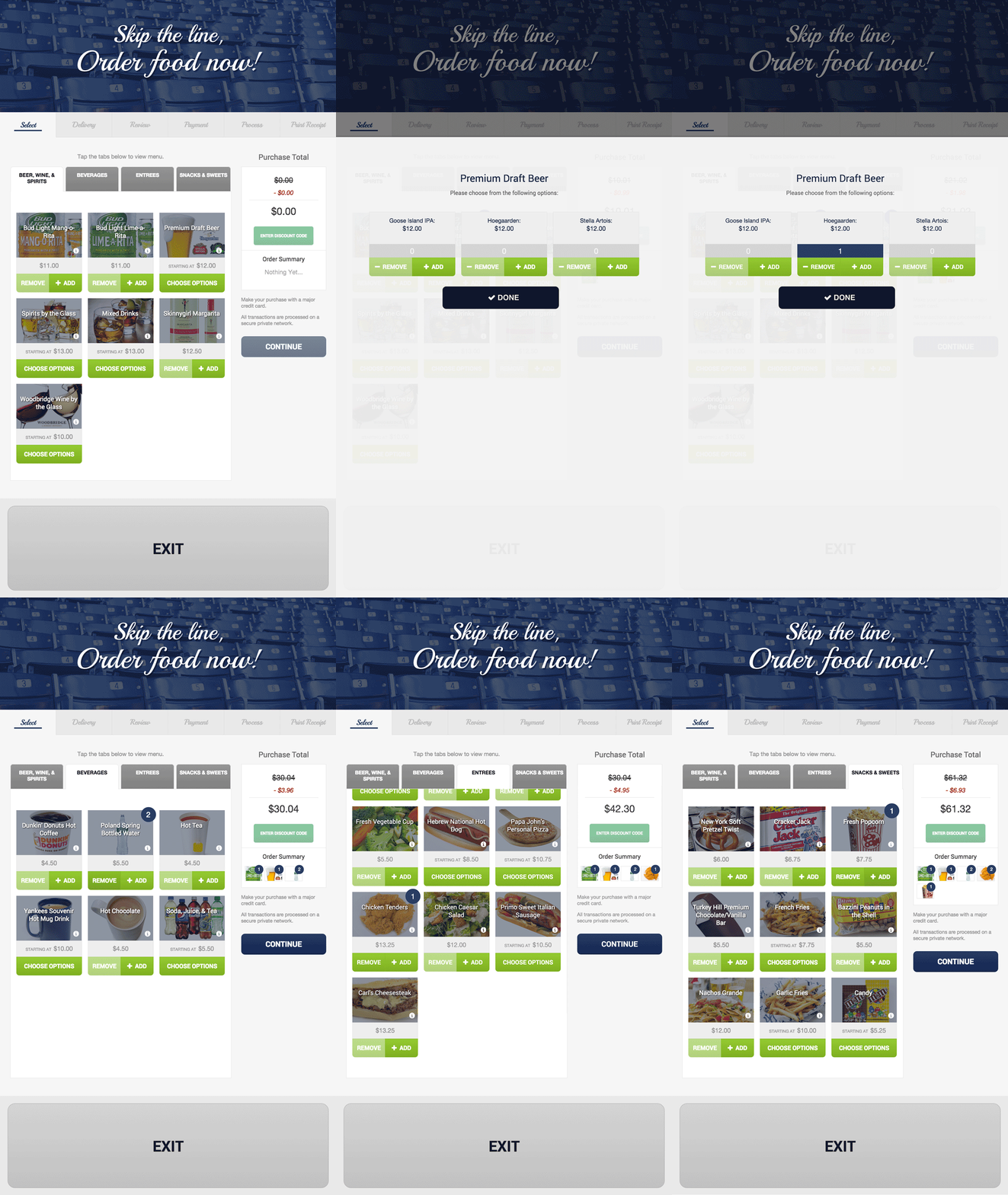
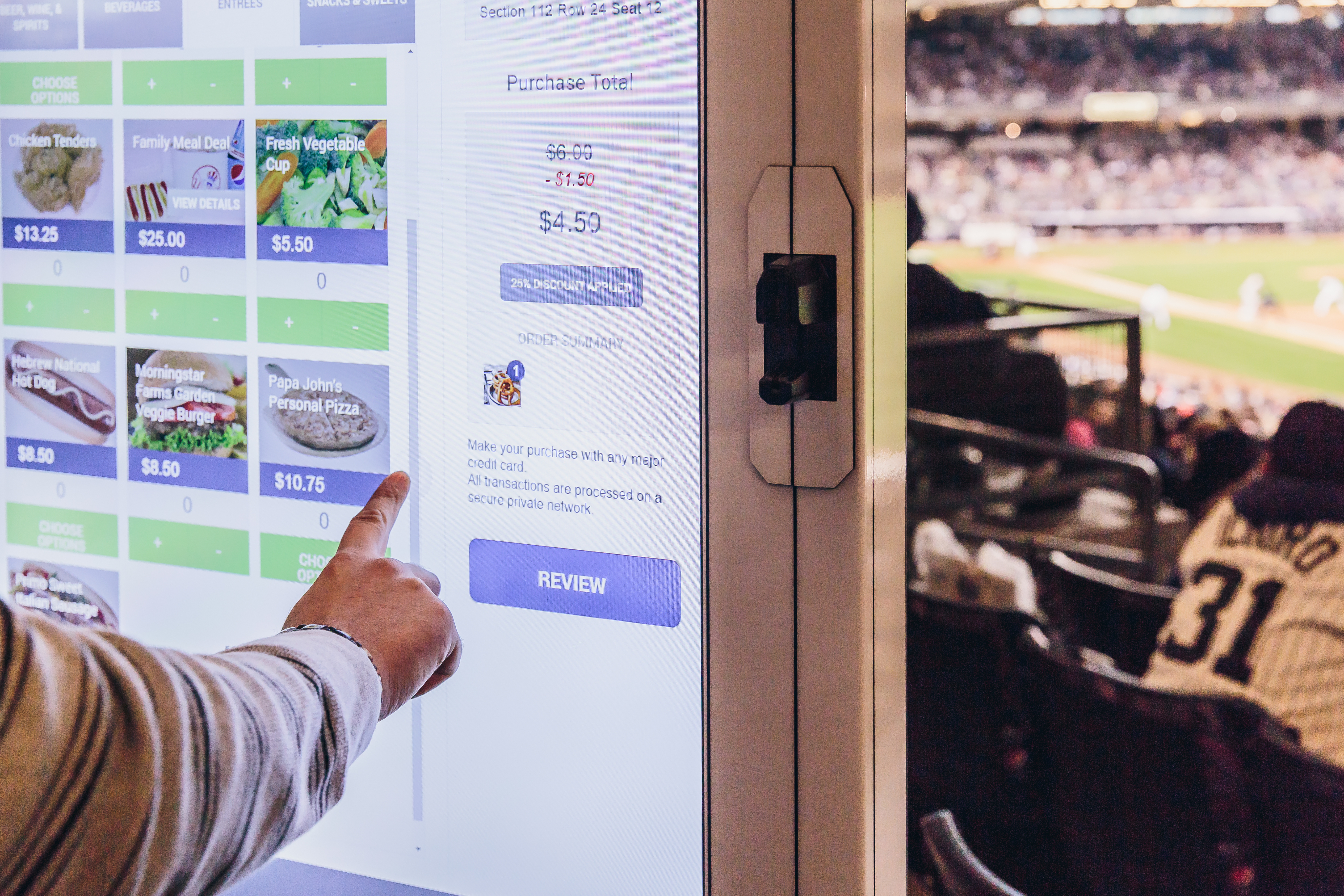
Yankee Stadium digital concession menu
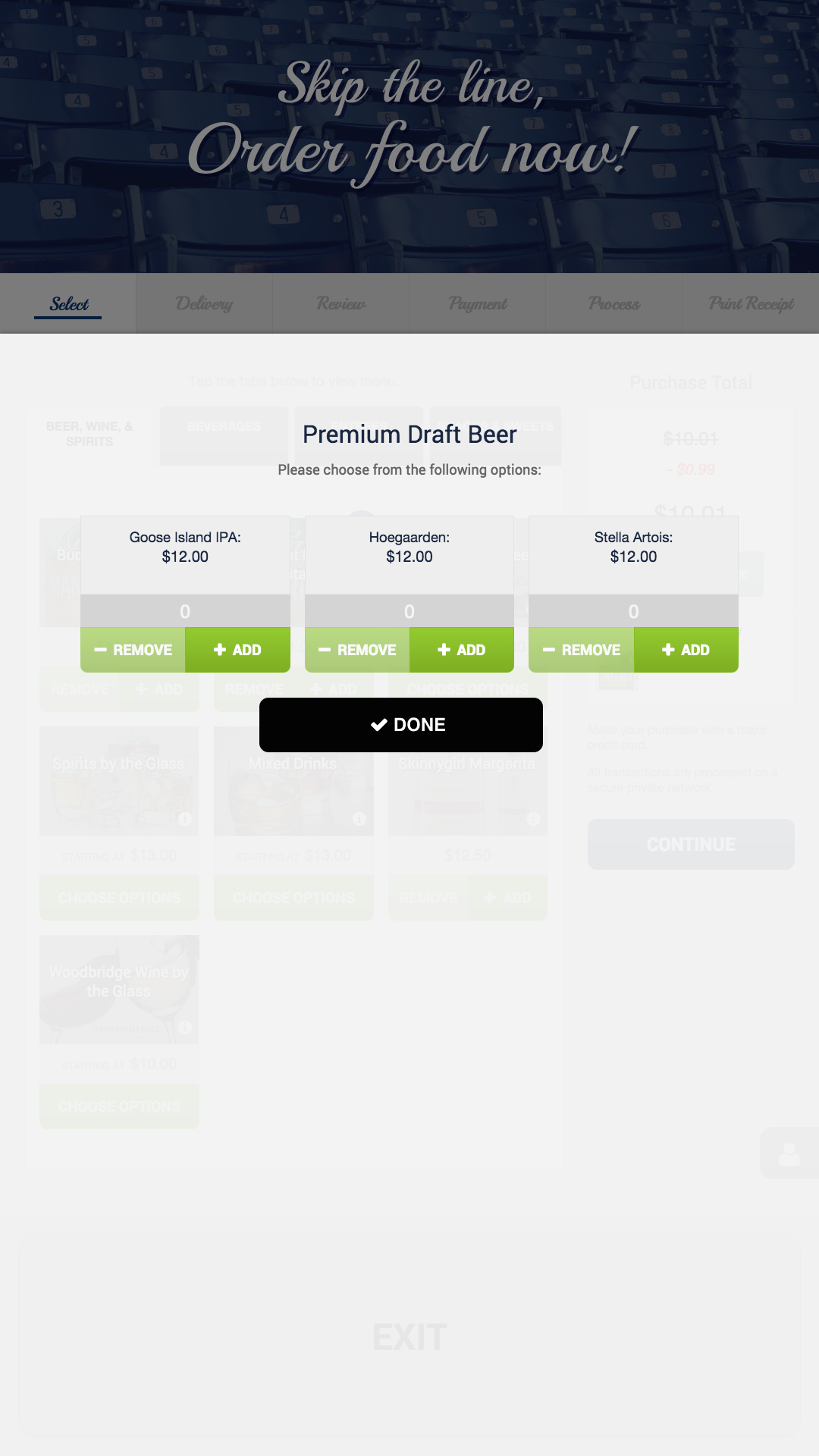
Food and beverage option selection

Supporting options without slowing orders

Concession items introduced additional complexity through choices such as brands, variations, or flavors.

The ordering flow incorporated these decisions directly into the process of building an order, allowing customers to configure an item before continuing while keeping the overall interaction appropriate for a fast-moving stadium environment.

Designing the order review around stadium fulfillment

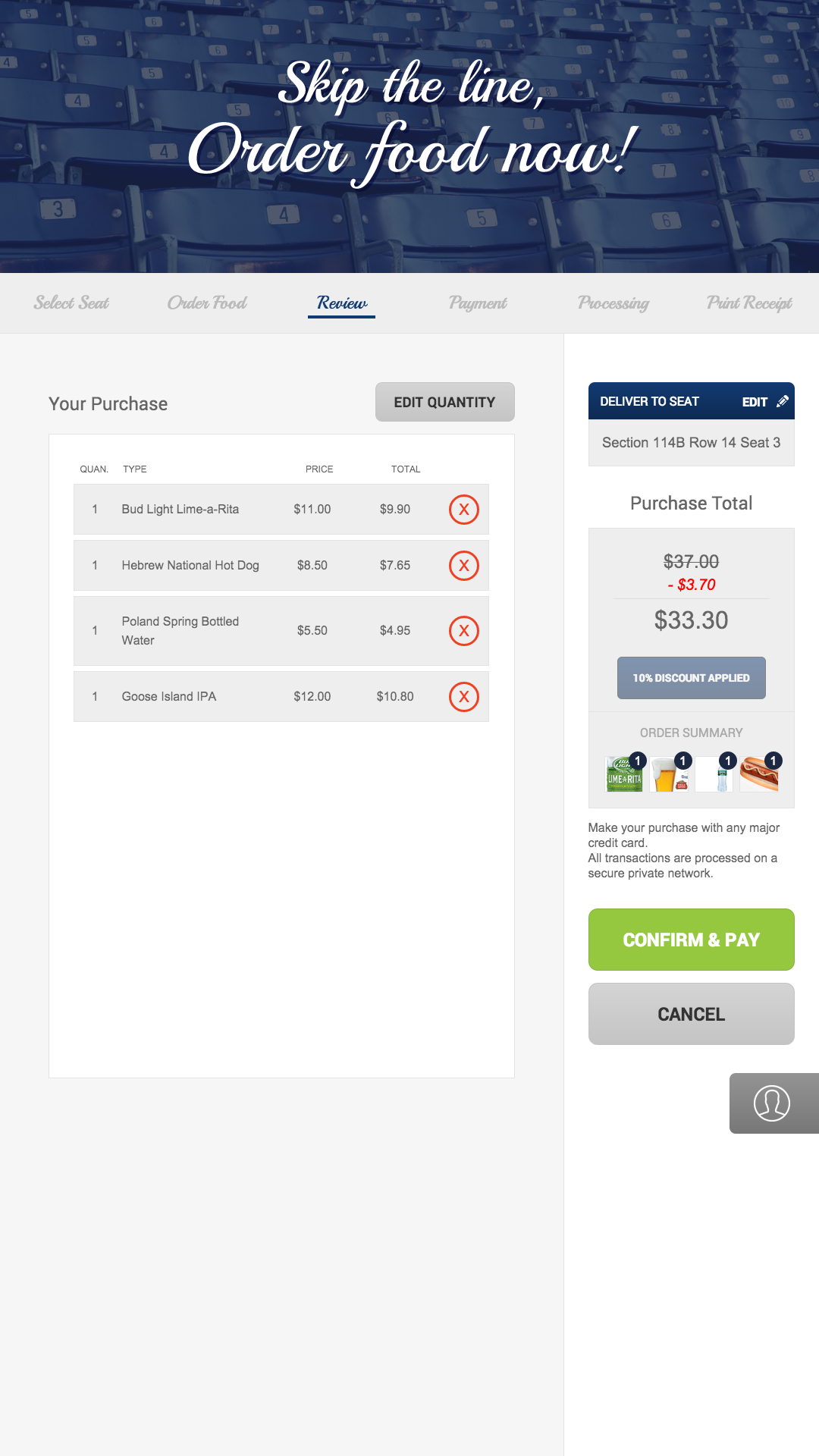
The order review screen served as more than a standard list of products in their order. In addition to reviewing selected food and beverages, customers needed to understand discount information and the seat-delivery details associated with their order.

Bringing these elements together at the final review stage gave customers an opportunity to verify both what they were purchasing and where the order would be delivered before completing the transaction.

Order review and discount information
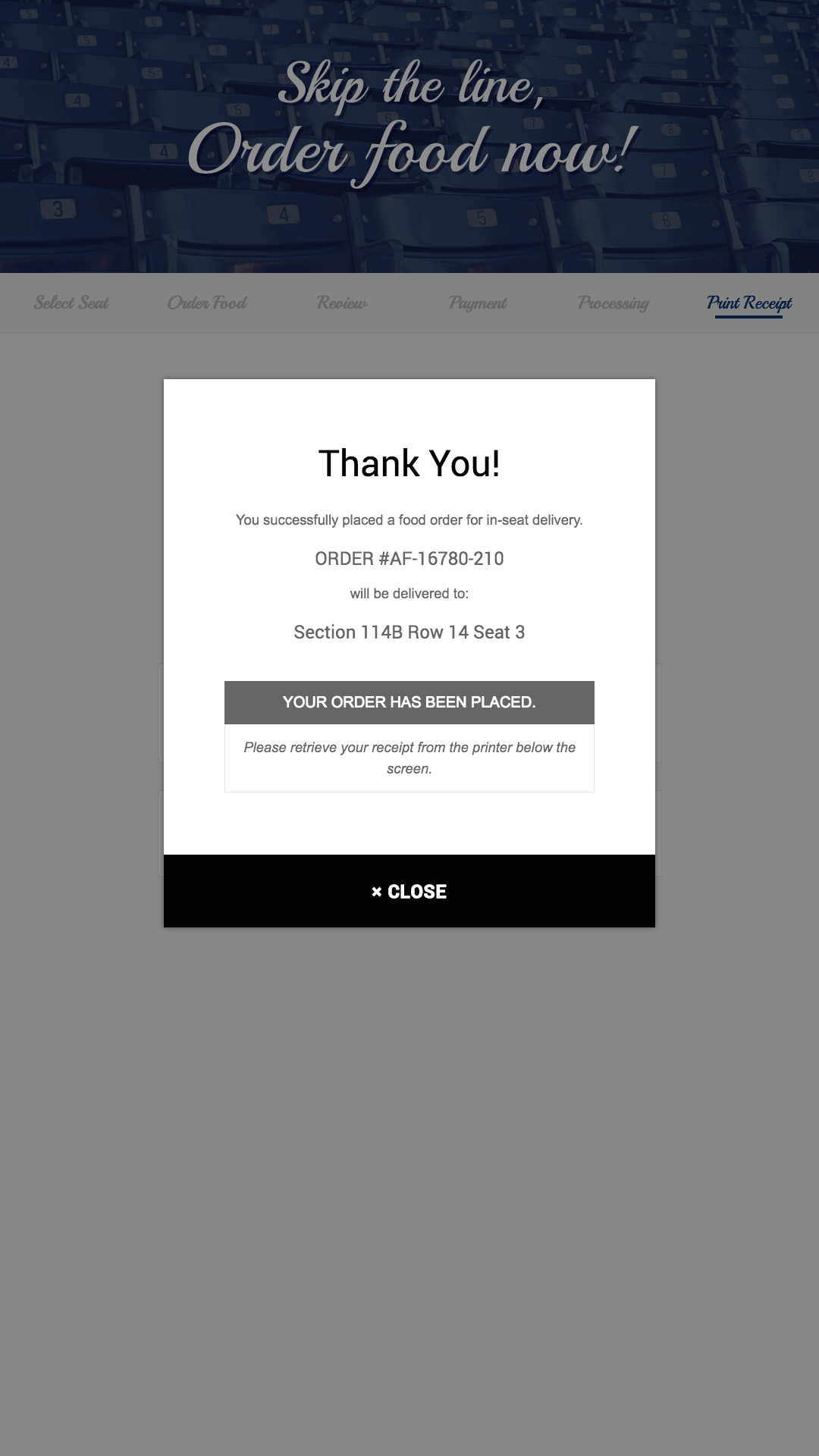
Seat delivery information screen

Connecting kiosk ordering to in-seat delivery

The experience extended beyond the kiosk itself - once an order was submitted, stadium staff prepared the food and delivered it directly to the attendee's seat.

That service model shaped the interface: the transaction needed to capture delivery information clearly enough to support the operational handoff while reassuring customers that they could leave the kiosk and return to watching the game.

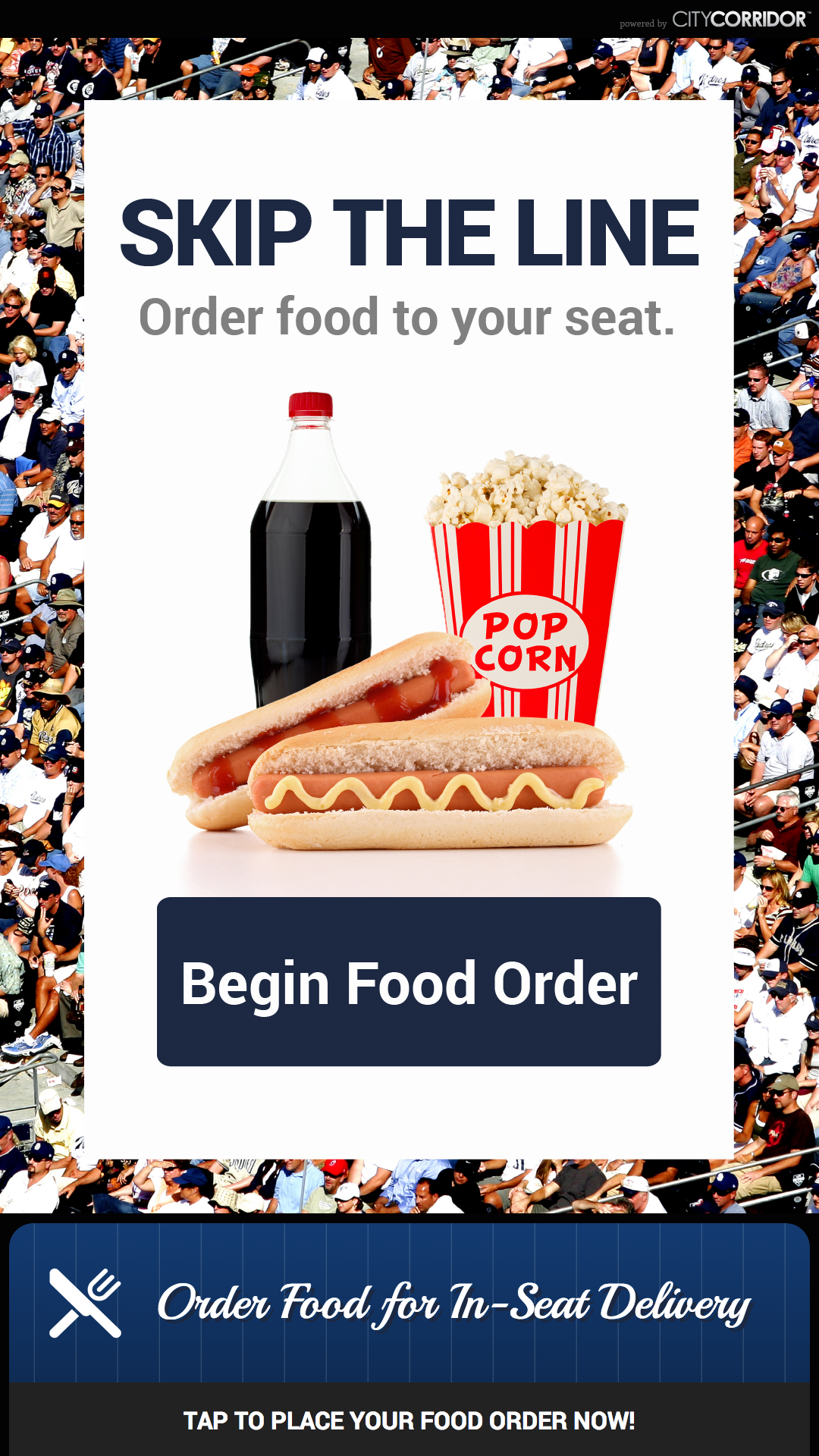
Yankee Stadium ordering promotion screen
Yankee Stadium menu screen
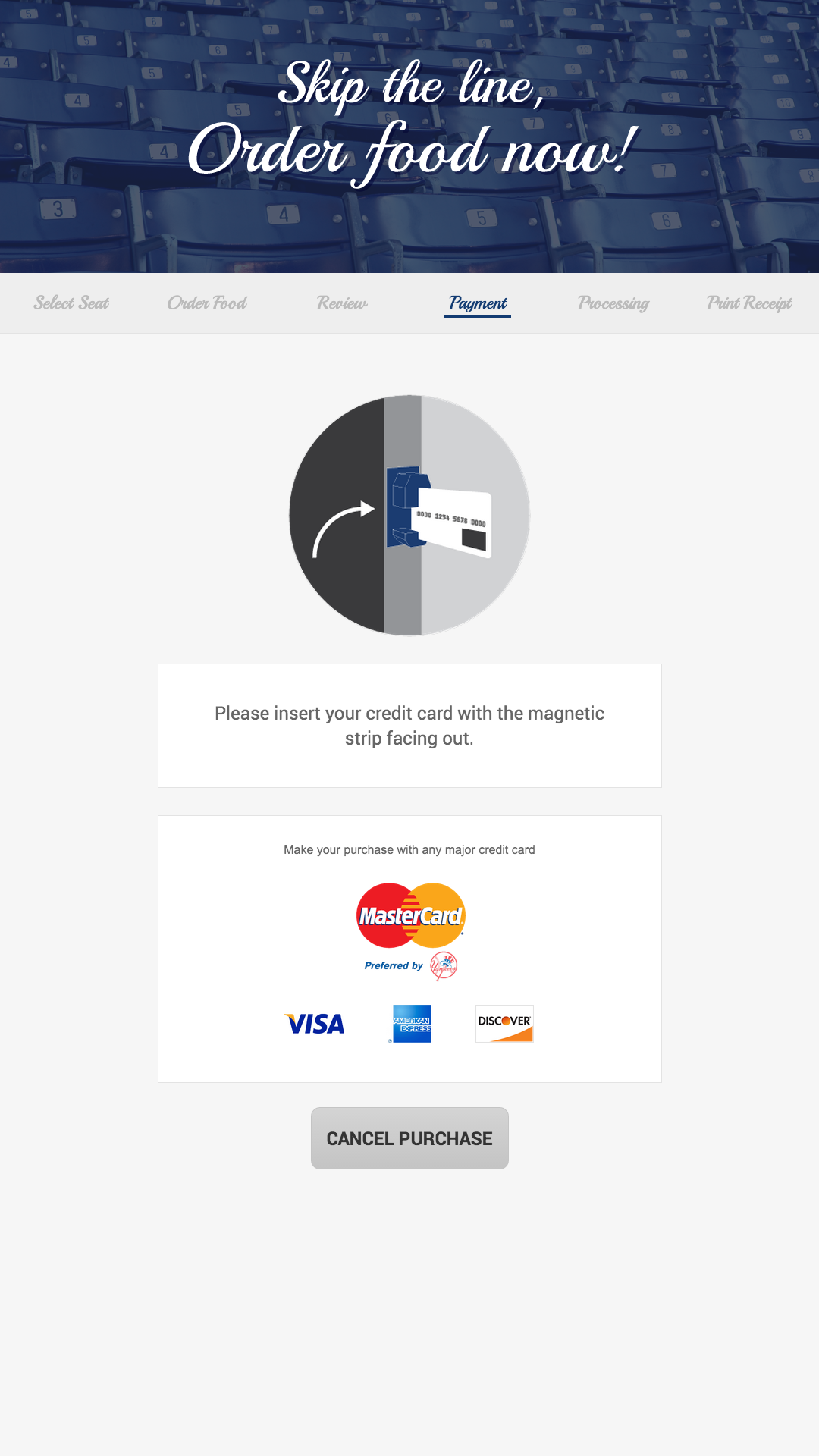
Yankee Stadium payment screen
Fans and a food-ordering kiosk at Yankee Stadium

Designed while directing creative at City Corridor

Back to Portfolio